
PRODUCT THINKING IN ACTION
Turning Strategy into Action
2019
Overview
iRobot brought Thoughtworks in to continue the work initiated by another well-known company, known for popularizing design thinking. While that company provided iRobot with valuable foundational insights, they did not equip the teams with actionable tools or steps to move forward.
That gap made this hands-on workshop crucial, enabling teams to take immediate and meaningful action.
This case study matters deeply to me because the Product Thinking Workshop (PTW) wasn’t just a typical workshop.
It served as a multi-phased crash course in product building, designed to help iRobot’s teams work better together and make real progress.
Impact
Bridged the gap between high-level strategy and actionable implementation by designing a hands-on, multi-phased workshop.
Delivered practical tools and templates to empower teams to translate insights into real-world applications.
Adapted quickly to constraints like tight timelines and limited initial information, wearing multiple hats to ensure success.
Created a safe, collaborative environment for teams to engage creatively, align on goals, and drive impactful outcomes.
“It’s the best of these types of workshops I’ve been through. And we’ve been through a lot. I’m leaving with a big sense of completion — it was wrapped up nicely in mature concepts, whereas other workshops have ended earlier with a less clear endpoint.”
Senior Hardware Engineer, iRobot
My Role
Organized the Product Thinking Workshop within a two-week timeline, navigating limited internal information from iRobot and structuring the overall workshop flow.
Designed visual artifacts, such as posters and tools, to clarify abstract ideas, engage participants, and drive alignment on impactful outcomes.
Collaborated closely with a product strategist and another designer to tailor exercises and ensure alignment with iRobot’s goals.
Facilitated the workshop, adapting on the fly to keep discussions productive despite uncertainties during the sessions.
Demonstrated agility and impact, wearing multiple hats throughout the process and ensuring actionable outcomes for all participants.
Objectives
The Workshop was design to:
Align: Foster a shared understanding of the problem space and customer needs.
Ideate: Generate innovative product concepts to address unmet user needs.
Prioritize: Mature and prioritize concepts for further development.
Plan: Develop test plans to validate product hypotheses and de-risk decisions.
Team
Myself, working as a Senior Product Designer where I led the workshop structure, designed visual artifacts, and facilitated sessions to ensure actionable outcomes.
Another Product Designer who provided additional design expertise and support during the creation of workshop artifacts and activities.
Product Manager who focused on aligning the workshop's goals with strategic objectives and ensuring the outcomes were relevant to iRobot’s needs.
The workshop not only helped iRobot validate next-generation floorcare robot concepts but also positioned Connected (acquired by Throughtworks in 2022) as a thought leader in customer-centric product development, solidifying its reputation and paving the way for future successes.
Engagement Approach
The workshop was thoughtfully designed to align iRobot’s goals with a structured, sprint-based framework. Each sprint focused on a distinct goal, with activities tailored to build momentum and deliver actionable results. The sequence of these sprints ensured a balance between exploration and focus, creating a streamlined path from problem definition to testable concepts.
SPRINT 1
This initial sprint aimed to build empathy for users and uncover key insights about their needs and struggles. Through methods like Jobs-To-Be-Done theory and empathy mapping, we fostered a shared understanding of the problem space. These foundational insights guided the rest of the workshop.
Understanding Customers
SPRINT 2
The second sprint was about turning user insights into opportunities. We framed challenges using How-Might-We (HMW) statements, which helped channel creativity into ideation activities. The result was a broad range of product ideas aligned with iRobot’s goals.
Opportunity Framing & Idea Generation
SPRINT 3
In this sprint, the focus shifted to refining and prioritizing ideas. Using evaluation criteria and tools like the Value Proposition Canvas, we selected winning concepts and detailed their potential impact through concept posters and storyboards.
Concept Evaluation & Maturation
SPRINT 4
The final sprint prepared the team for validation. We designed test plans and identified hypotheses to de-risk the concepts, ensuring the next steps were clear and actionable. This phase was critical for translating ideas into tangible outcomes.
Make-to-Learn Planning
WORKSHOP PROCESS
When planning the Product Thinking Workshop for iRobot, my primary focus was creating a structure tailored to their specific challenges and goals.
Given the tight timeline, I prioritized reviewing past research and collaborating with the team to craft an agenda that would drive meaningful outcomes. This required balancing strategic thinking with practical execution.
Pre-Workshop Preparation
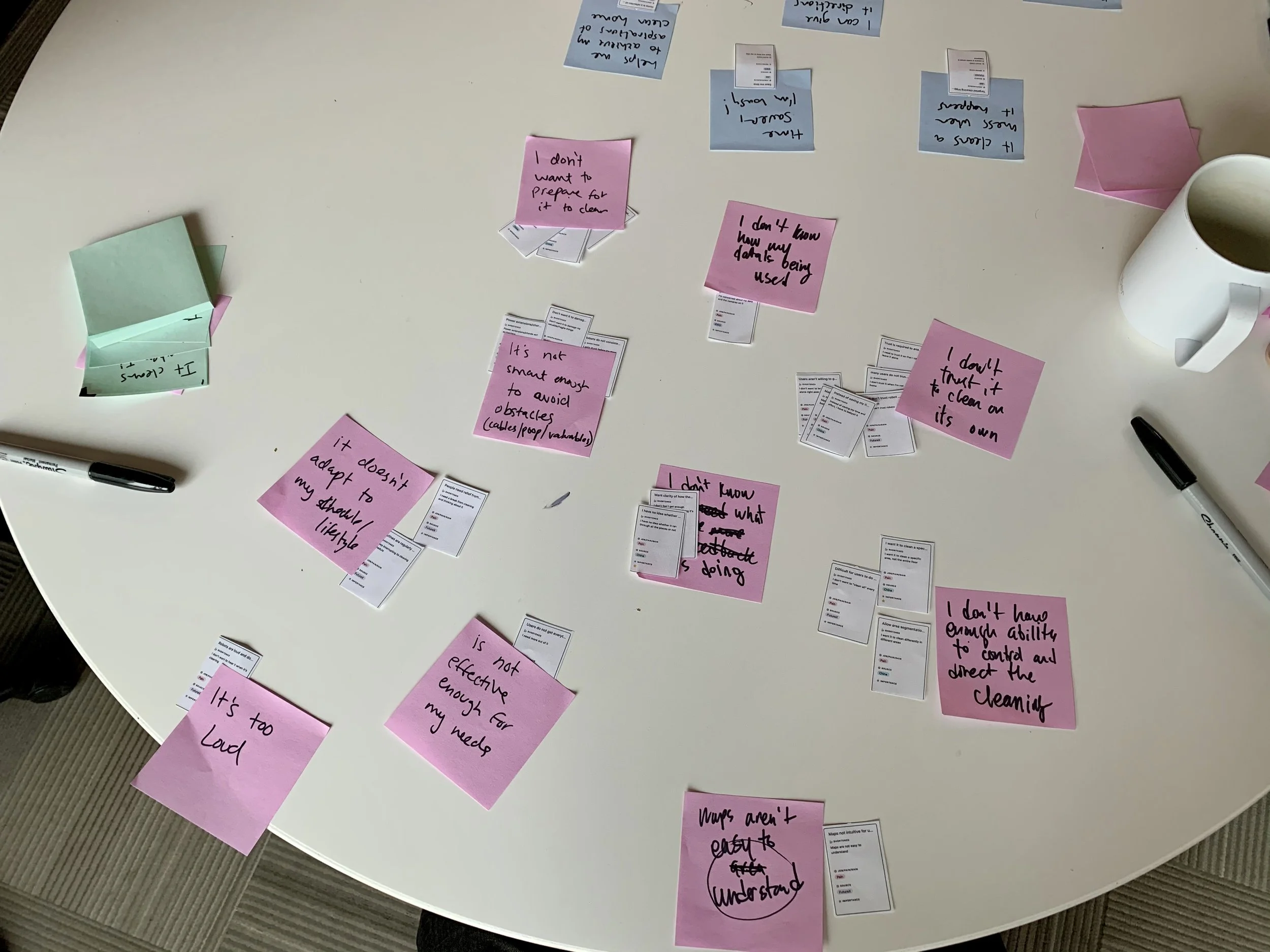
After a thorough review of the previous user research that iRobot conducted, the team and in synthesized key themes that we could bring in as examples for the workshop.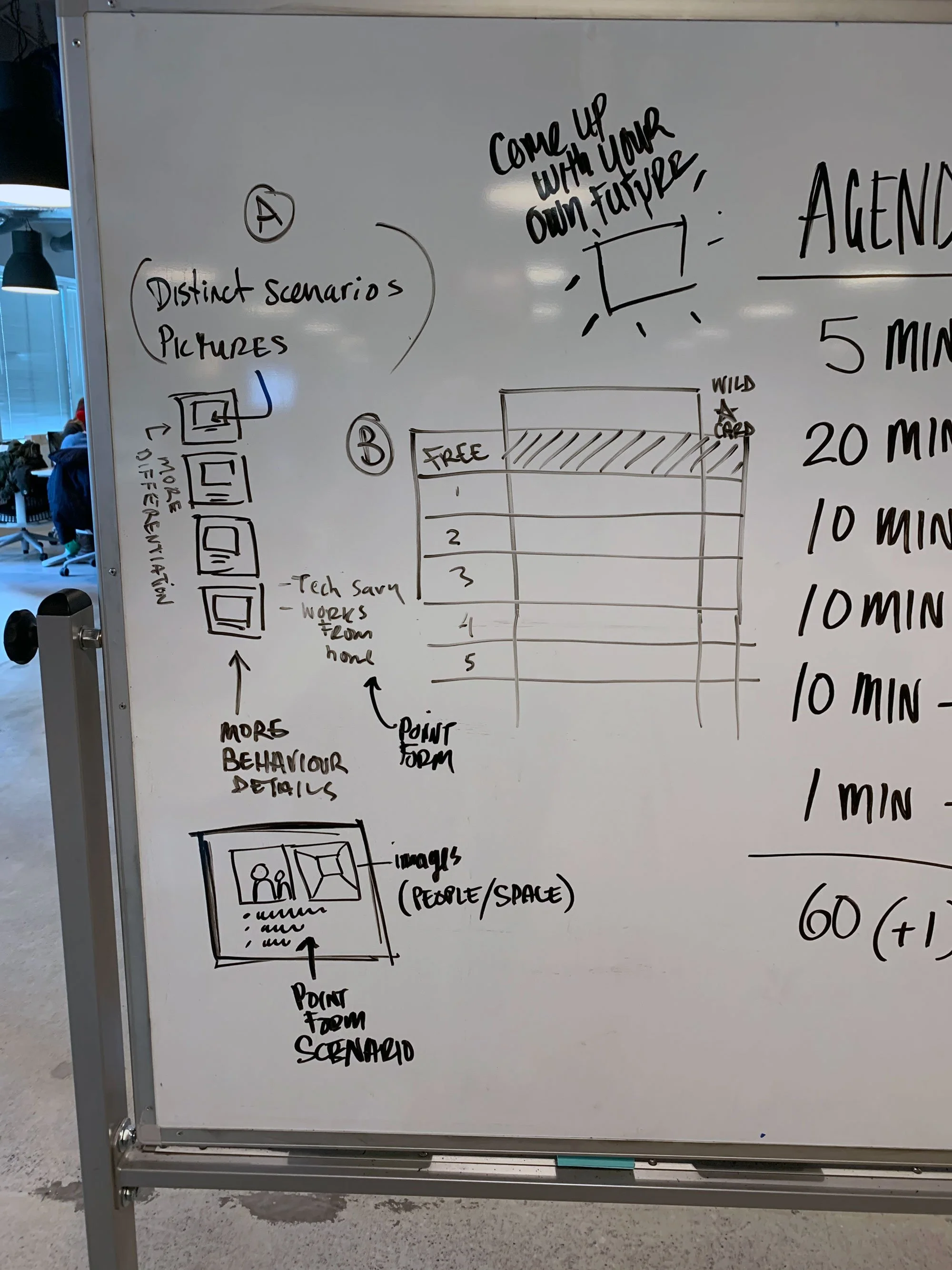
Prioritizing the workshop agenda.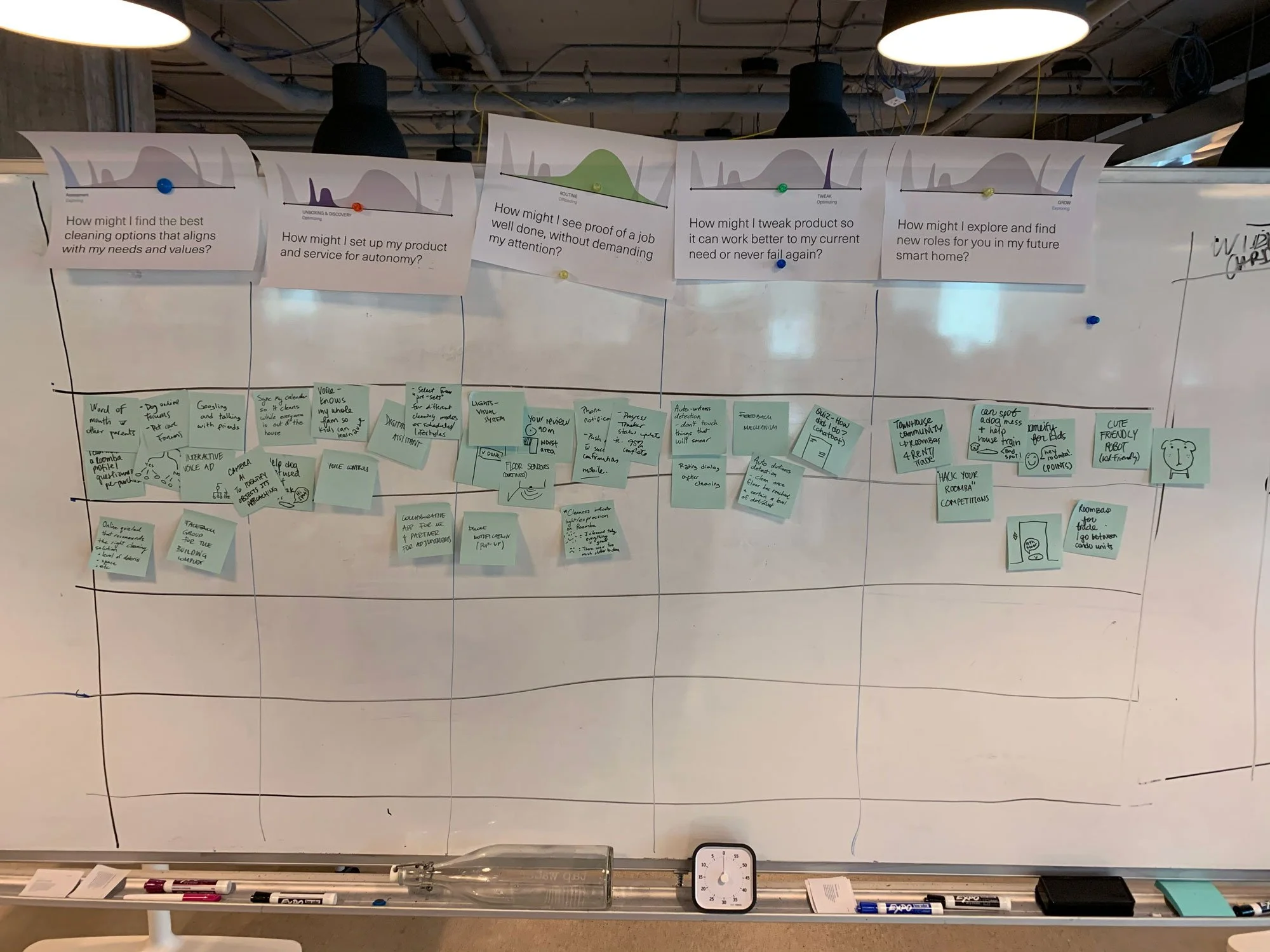
Using opportunity framing for workshop content.Setting up the necessary tools and resources was vital to ensuring the workshop would run smoothly and engage participants effectively from the outset.
By honing in on what mattered most, I ensured the workshop not only aligned with iRobot’s objectives but also empowered their teams to take immediate and impactful action, fostering a sense of clarity and direction for future initiatives.
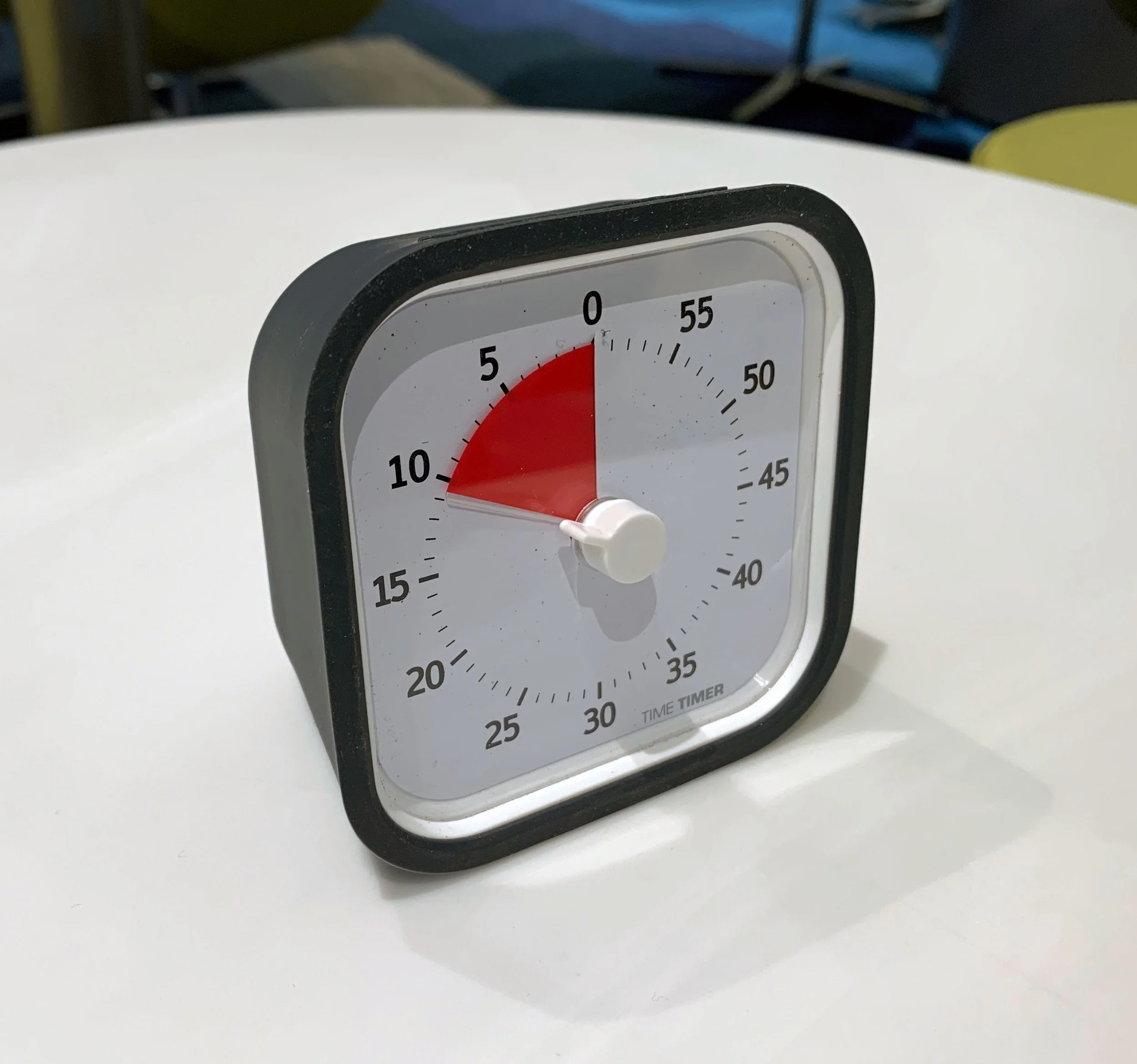
Time Timer: The unsung hero that keeps workshops (and my brain) running smoothly!WORKSHOP ACTIVITIES
During the Workshop
Facilitating the Product Thinking Workshop at the iRobot headquarters in Boston required both strategic foresight and adaptability.
My role began with leading immersive activities that brought participants into the problem space, helping them identify key challenges and opportunities.
I designed these activities to encourage collaboration, spark creativity, and ground discussions in actionable insights.
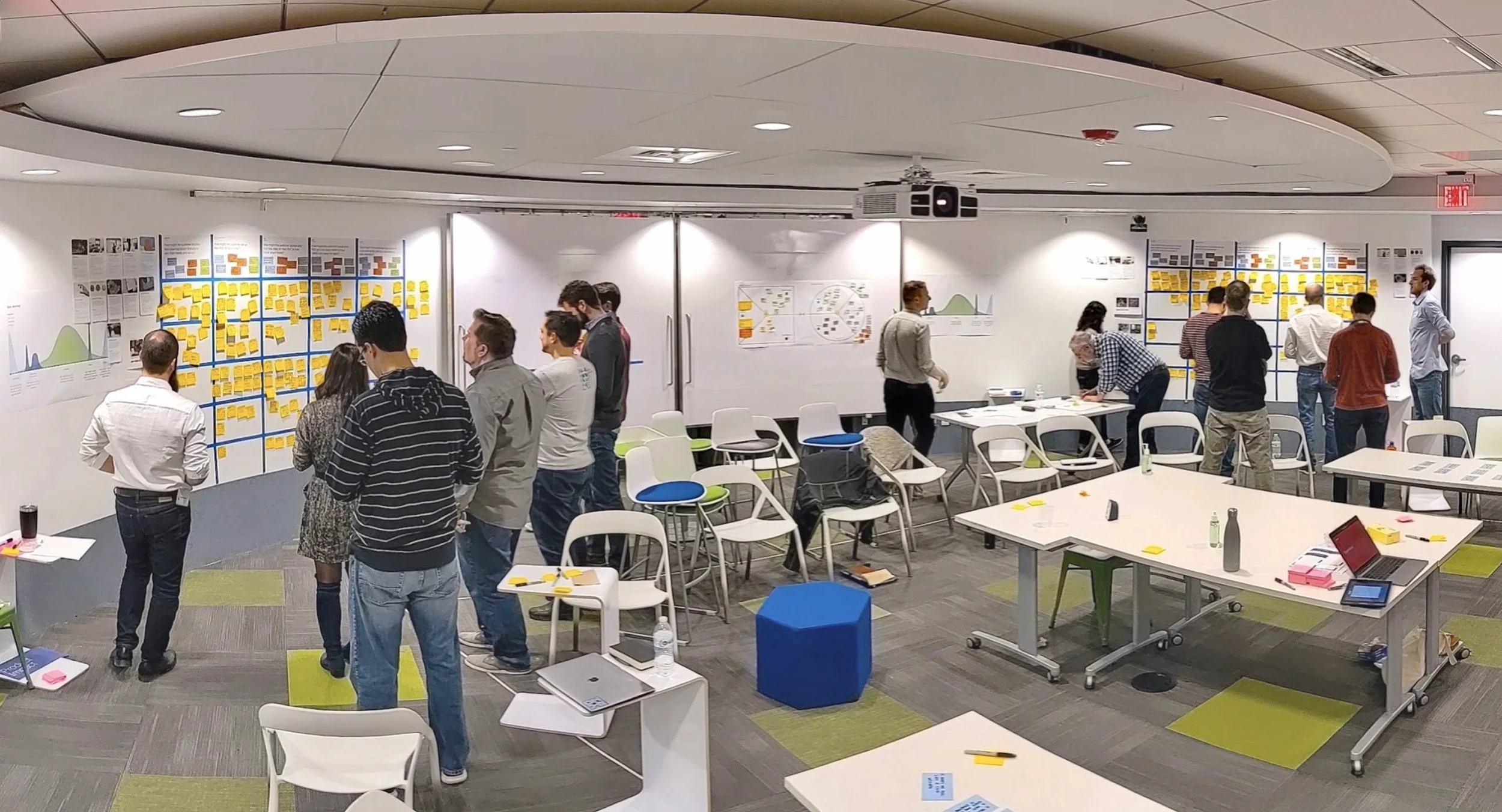
Two teams exploring ideas systematically with the Creative Matrix framework.As the workshop unfolded, I wore multiple hats: guiding participants through iterative idea refinement, ensuring alignment with the project’s goals, and adapting to the dynamic needs of the group. I also maintained momentum by balancing creative exploration with a focus on delivering clear, tangible outputs.
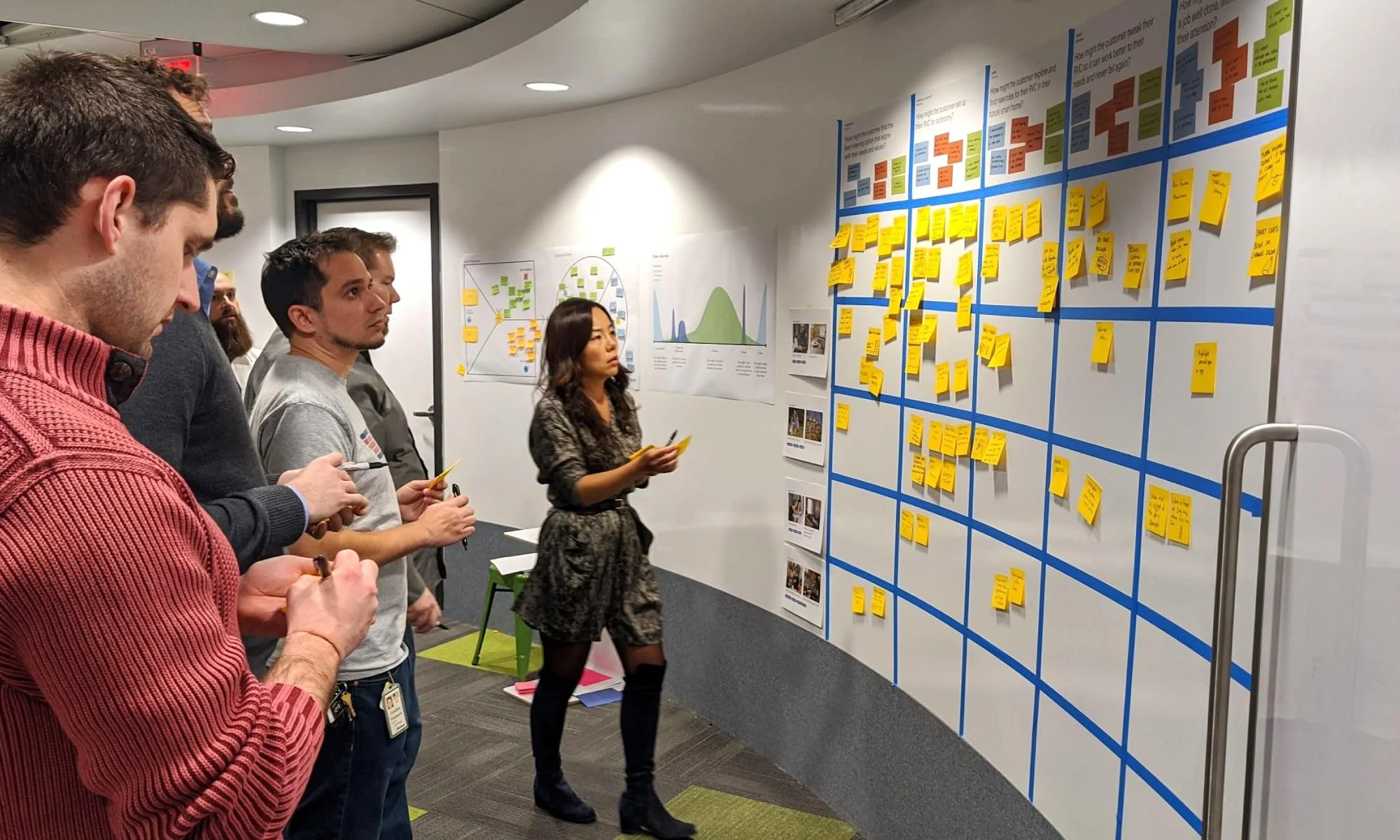
Team co-creating solutions by building on each other’s ideas in a dynamic brainstorming session.Participants engaged in brainstorming sessions using the Creative Matrix framework, a tool designed to organize and stimulate innovative thinking. By creating a grid that intersects key themes and focus areas, the framework encourages participants to explore diverse ideas systematically.
This approach not only helps generate a wide range of creative solutions but also ensures that each idea is aligned with the workshop’s objectives, providing a strong foundation for actionable outcomes.
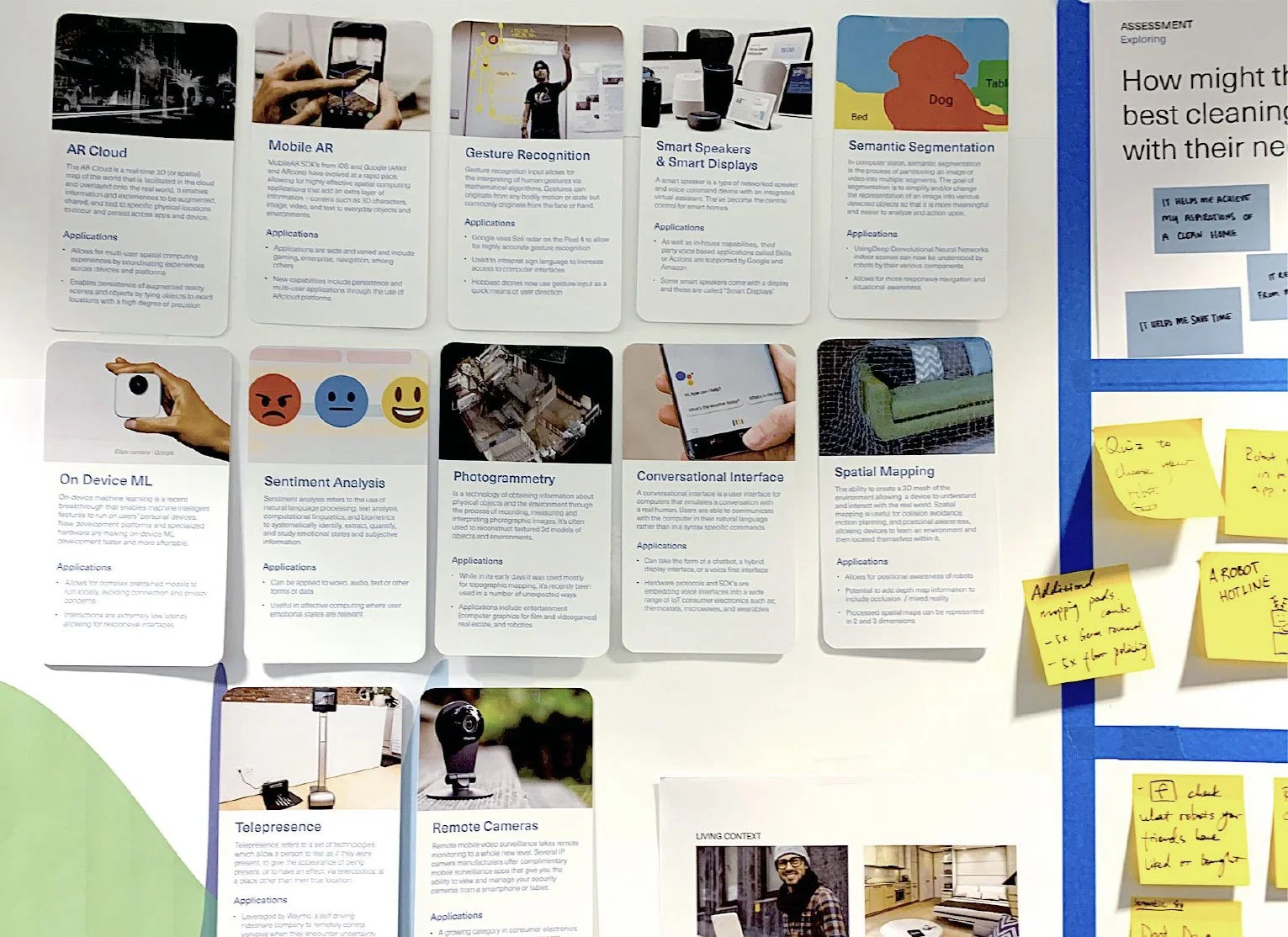
Sparking innovation with Technology Cards.Midway through the Creative Matrix exercise, participants were introduced to Technology Cards featuring concepts like Mobile AR, Conversational Interfaces, and Remote Cameras.
These cards served as prompts to inspire fresh perspectives and innovative approaches to integrating cutting-edge technologies into iRobot products.
By adding this layer of inspiration, the exercise encouraged participants to think beyond current constraints, fostering ideas that could lead to transformative product enhancements.
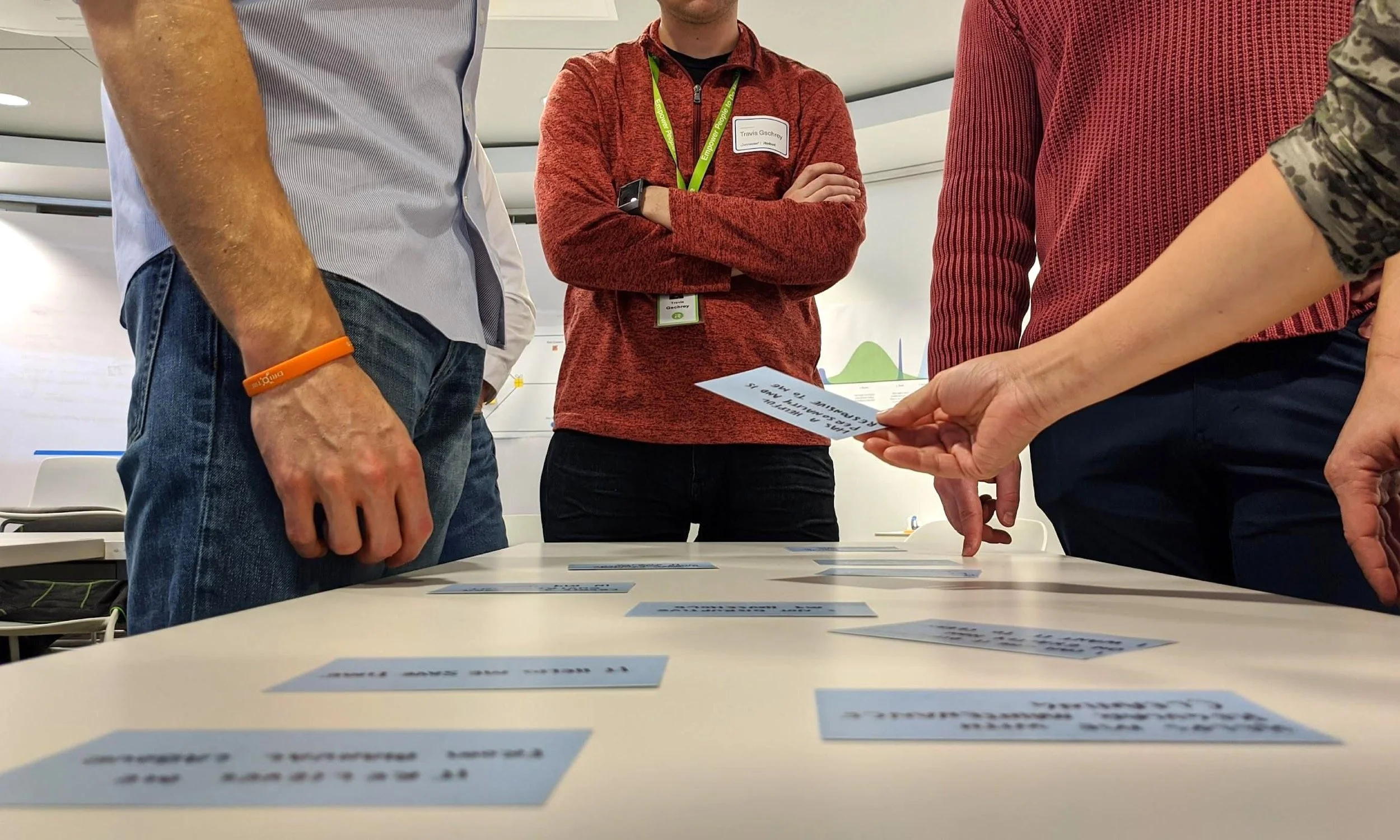
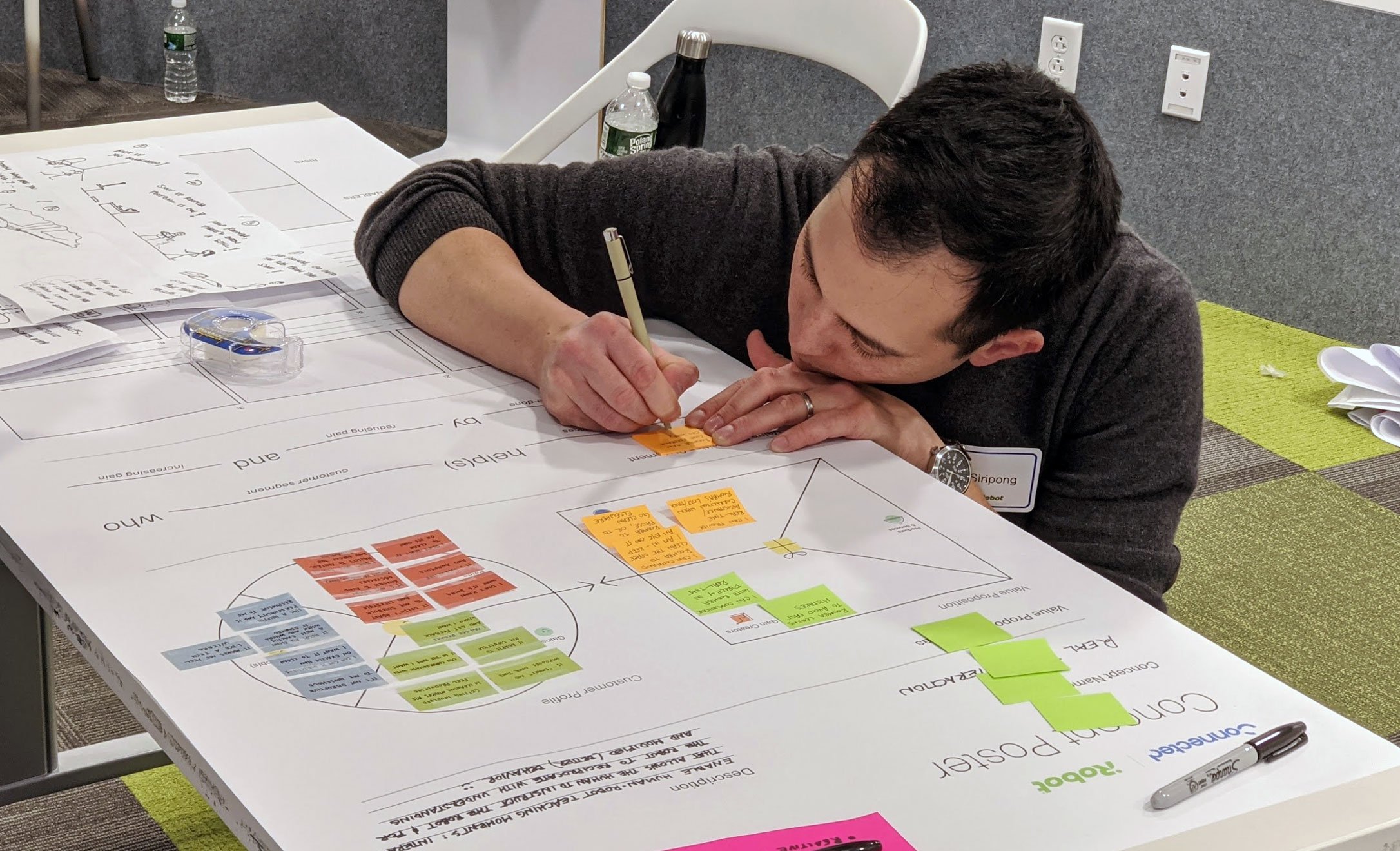
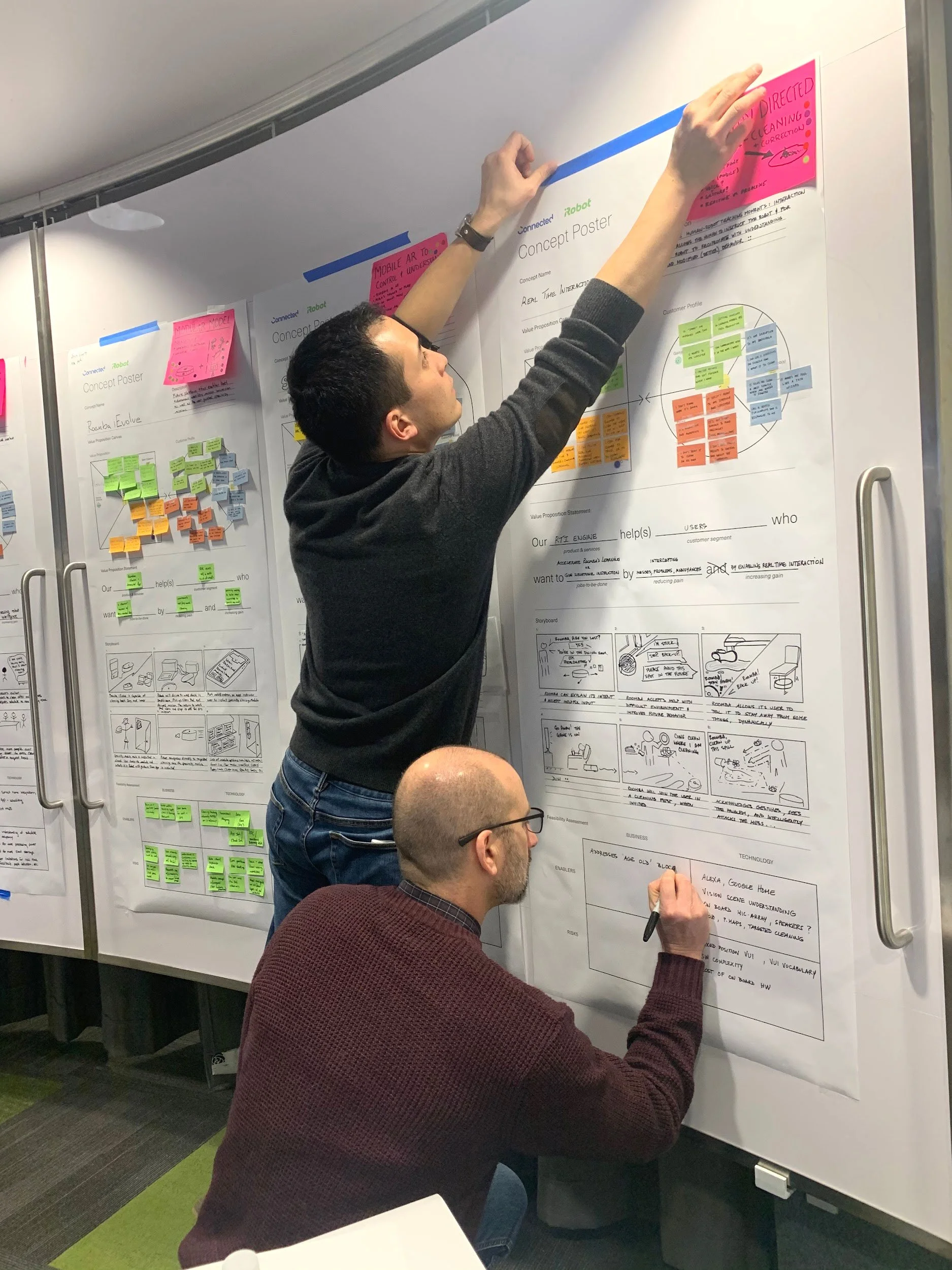
Team members collaboratively sorting and prioritizing idea cards during a hands-on design activity.WORKSHOP ACTIVITIES
Participant Presentations
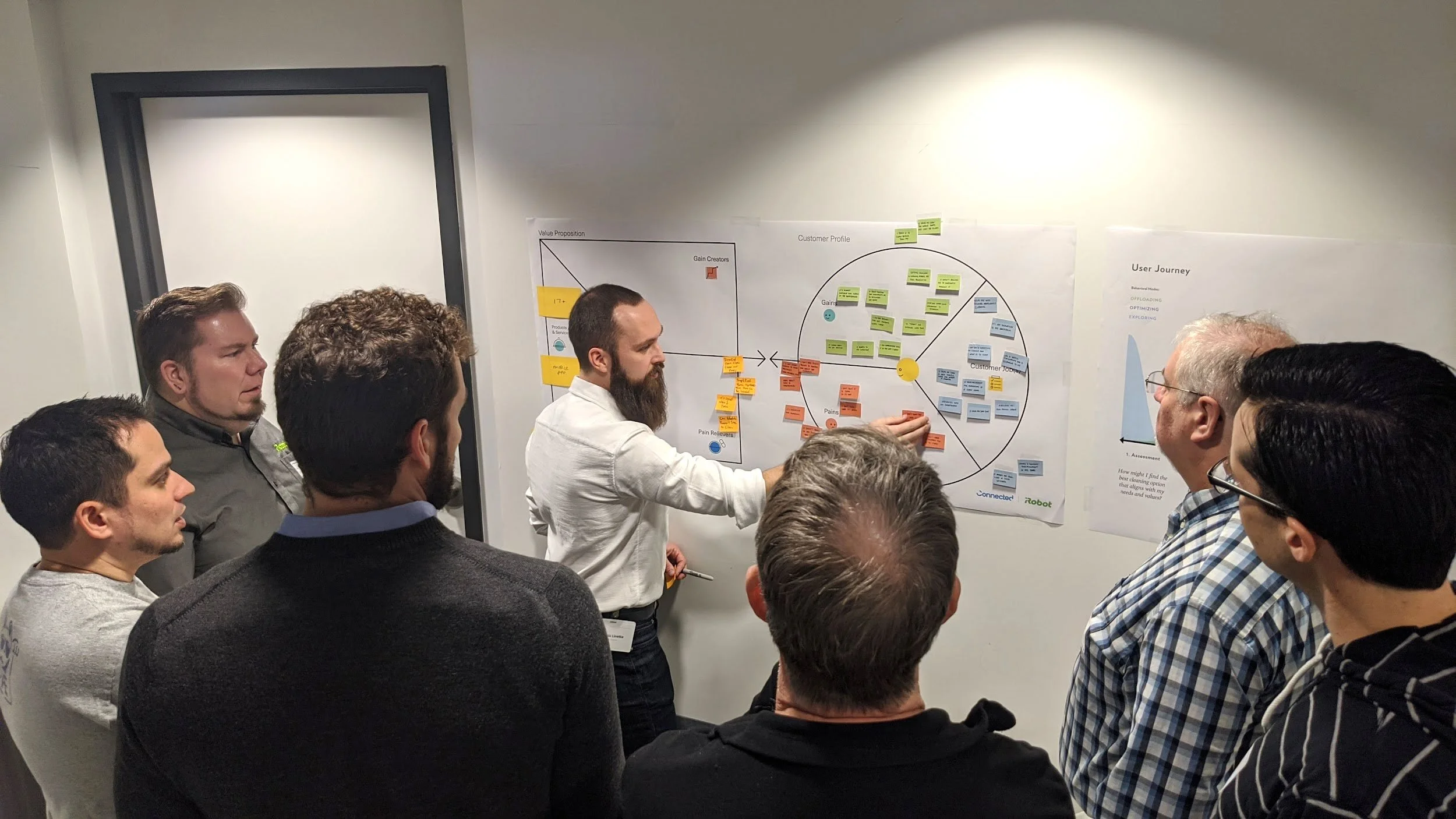
One of the most impactful elements of the Product Thinking Workshop was the participant presentations. After learning how to craft hypotheses, create How-Might-We statements, and utilize the Value Proposition Canvas—a framework that ensures products are centered around customer needs—teams worked on developing concept posters.
These posters allowed participants to visually articulate their ideas and demonstrate how their concepts aligned with user needs and business goals.
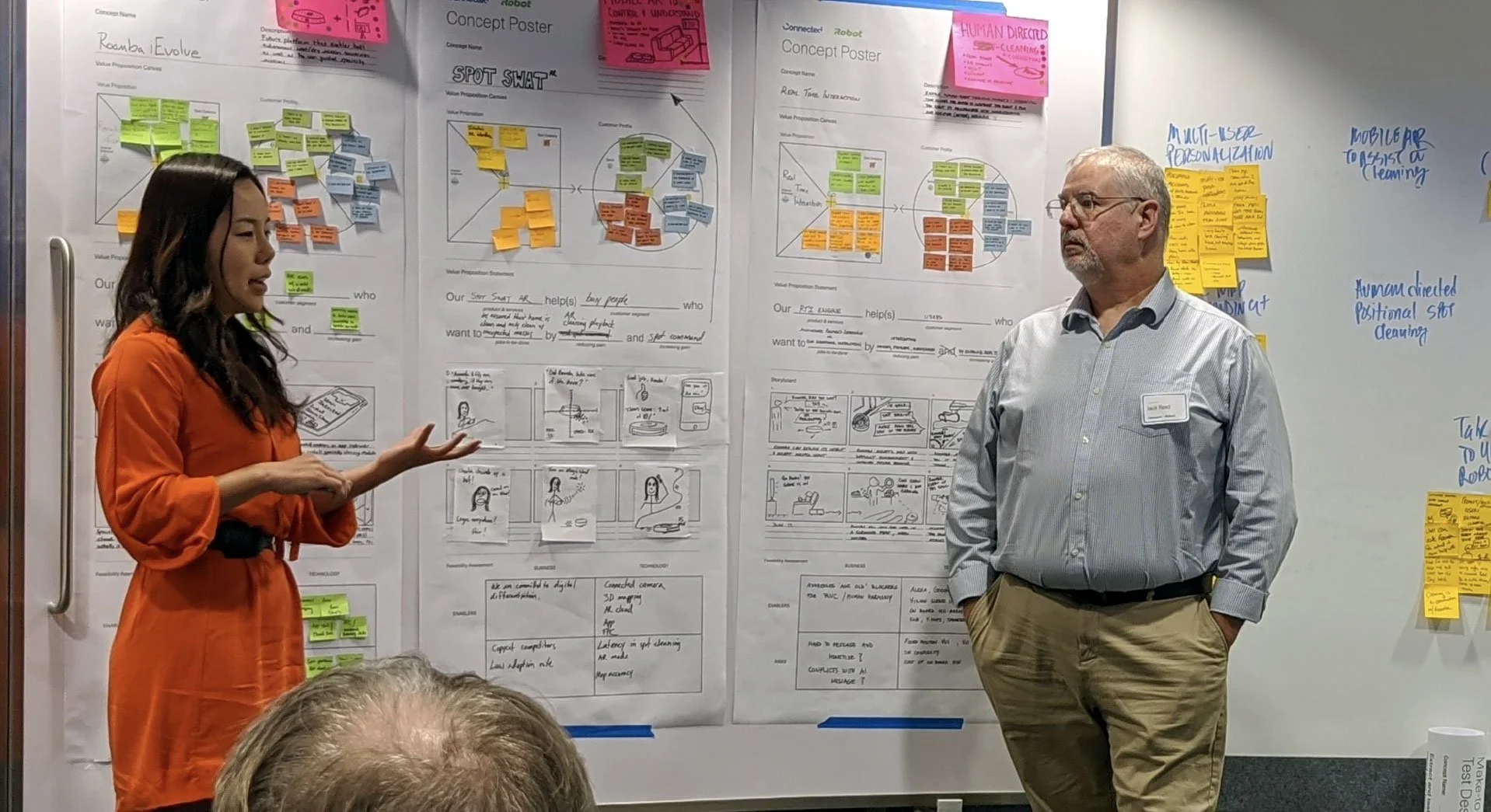
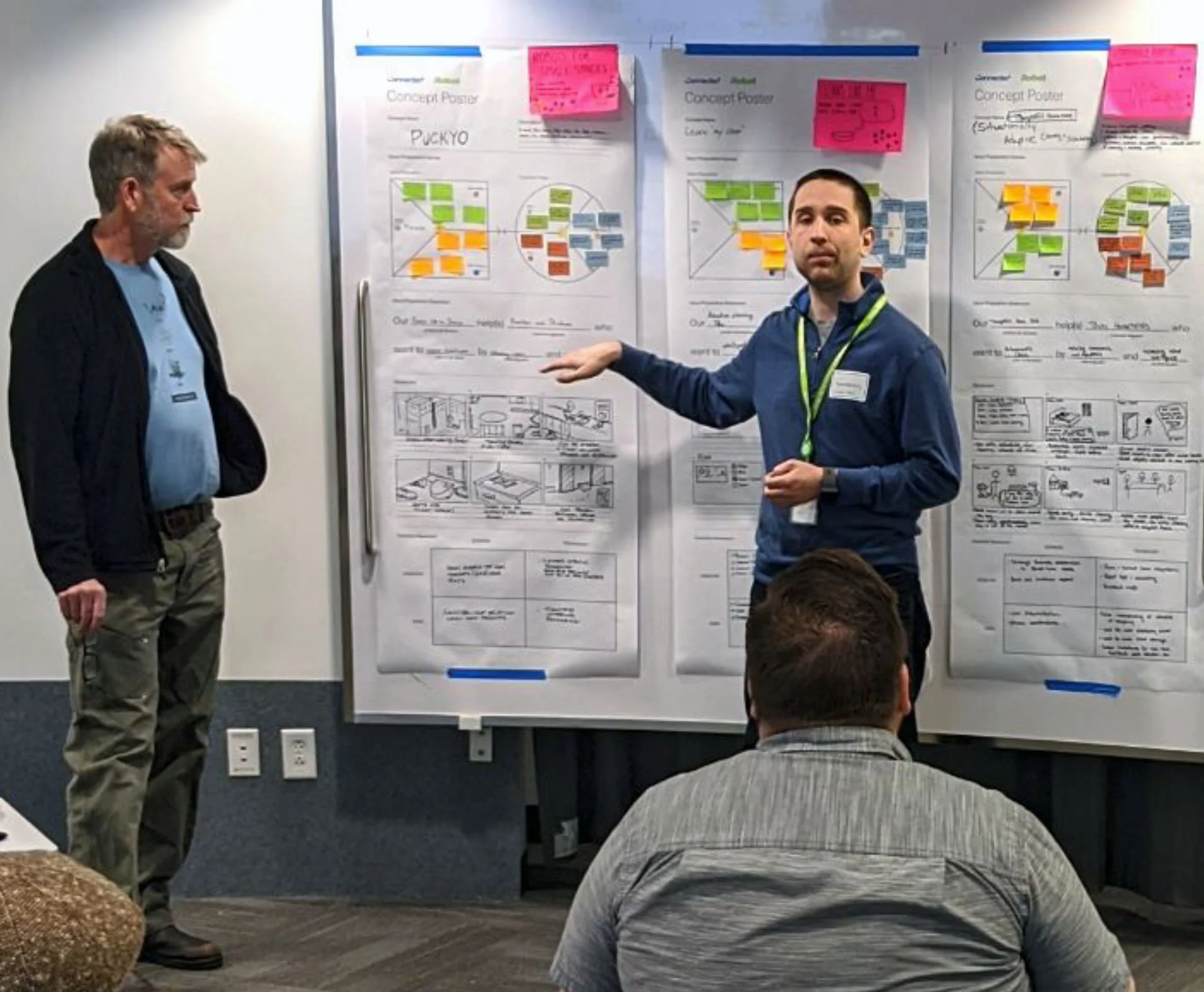
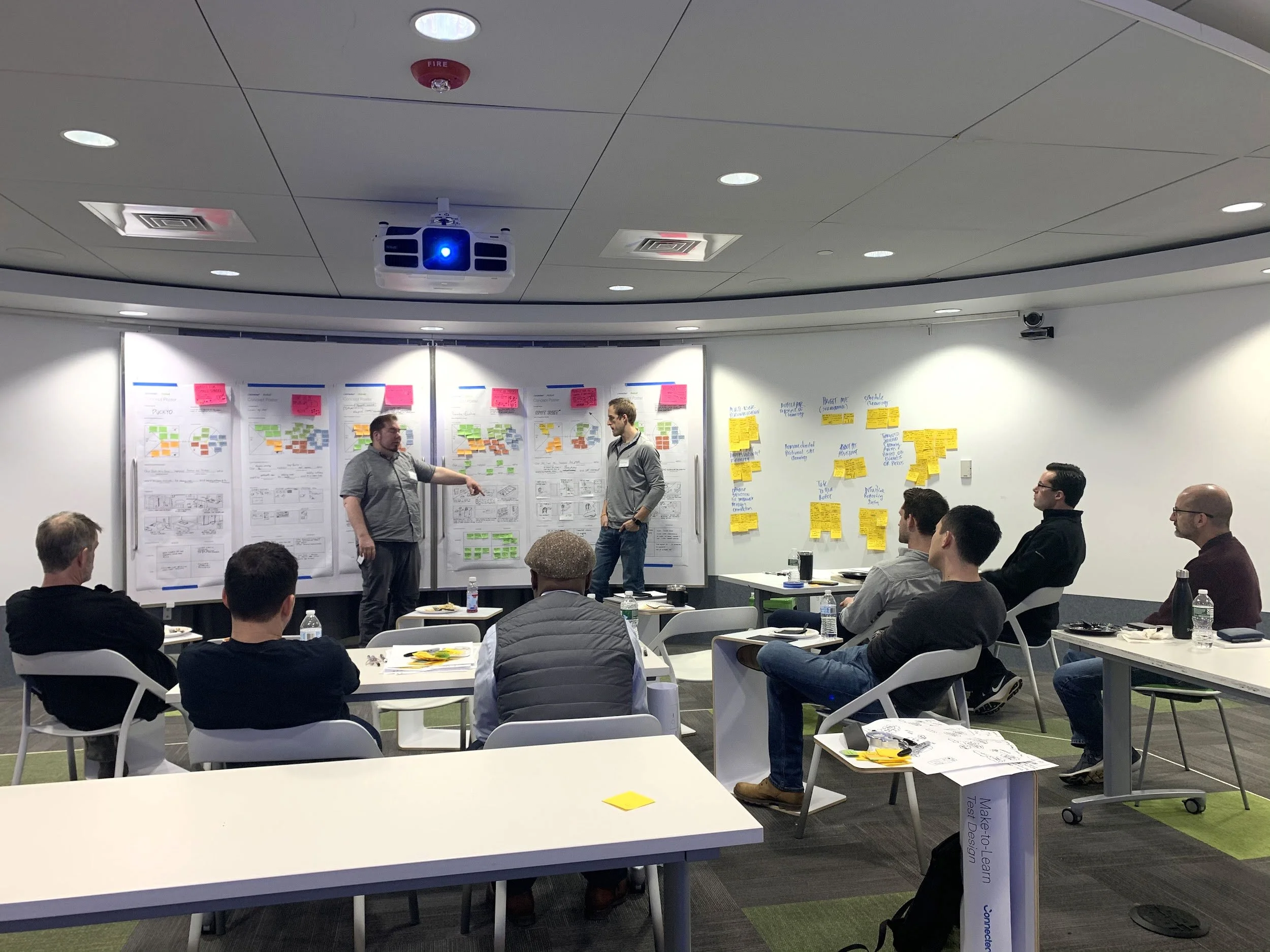
Teams presenting their concepts, value propositions, and feasibility insights during the workshopEach group presented their work by:
Sharing a comprehensive concept overview, summarizing the key aspects of their proposed solution.
Showcasing their Value Proposition Canvas, illustrating how their concept meets customer needs and adds value.
Crafting a clear Value Proposition Statement, articulating the unique benefits of their idea.
Conducting a feasibility assessment, analyzing enablers and identifying potential risks for both business and technology.
These presentations highlighted both opportunities and challenges, providing a balanced view of their proposed solutions. This process fostered meaningful discussions around feasibility, innovation, and strategic alignment while ensuring that each concept was grounded in both user insights and practical considerations.
POST-WORKSHOP SYNTHESIS
Turning Insights into Actionable Deliverables
After the workshop, I led the synthesis of all outputs, transforming raw insights into structured deliverables that iRobot could use to guide their next steps.
The goal was to ensure that the outcomes were not just theoretical but practical and aligned with their product development roadmap. This involved organizing findings, articulating key decisions, and creating a clear plan for validation and implementation.
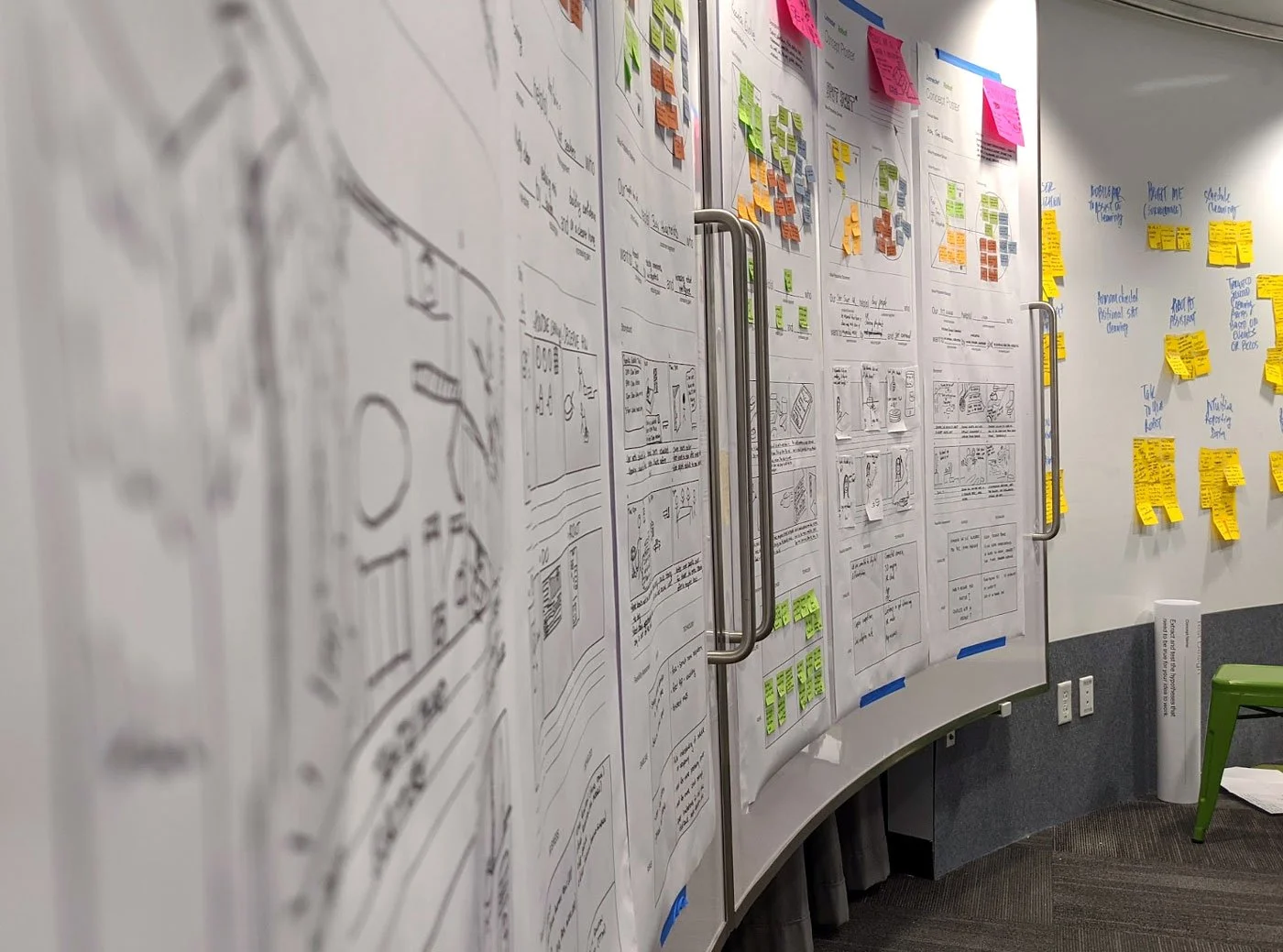
Team postersTo further support the teams, we flew back to Toronto with the workshop posters and provided reusable digital templates of the workshop activities to help iRobot integrate these tools into future projects and maintain the momentum. This ensured that the deliverables had long-term value, equipping teams with resources to innovate effectively.
OUTCOMES
The workshop delivered impactful results for iRobot:
A set of prioritized product concepts tailored to customer needs.
Enhanced understanding of the problem space and user pain points.
Strengthened iRobot’s internal Product Thinking capabilities.
A clear test plan to validate concepts and guide future development.
The deliverables from the Product Thinking Workshop were crafted to go beyond high-level visioning. It was critical to ensure that participants left not only with a sense of alignment but also with the tools and actionable steps needed to create real-world impact.
From Ideas to Impact
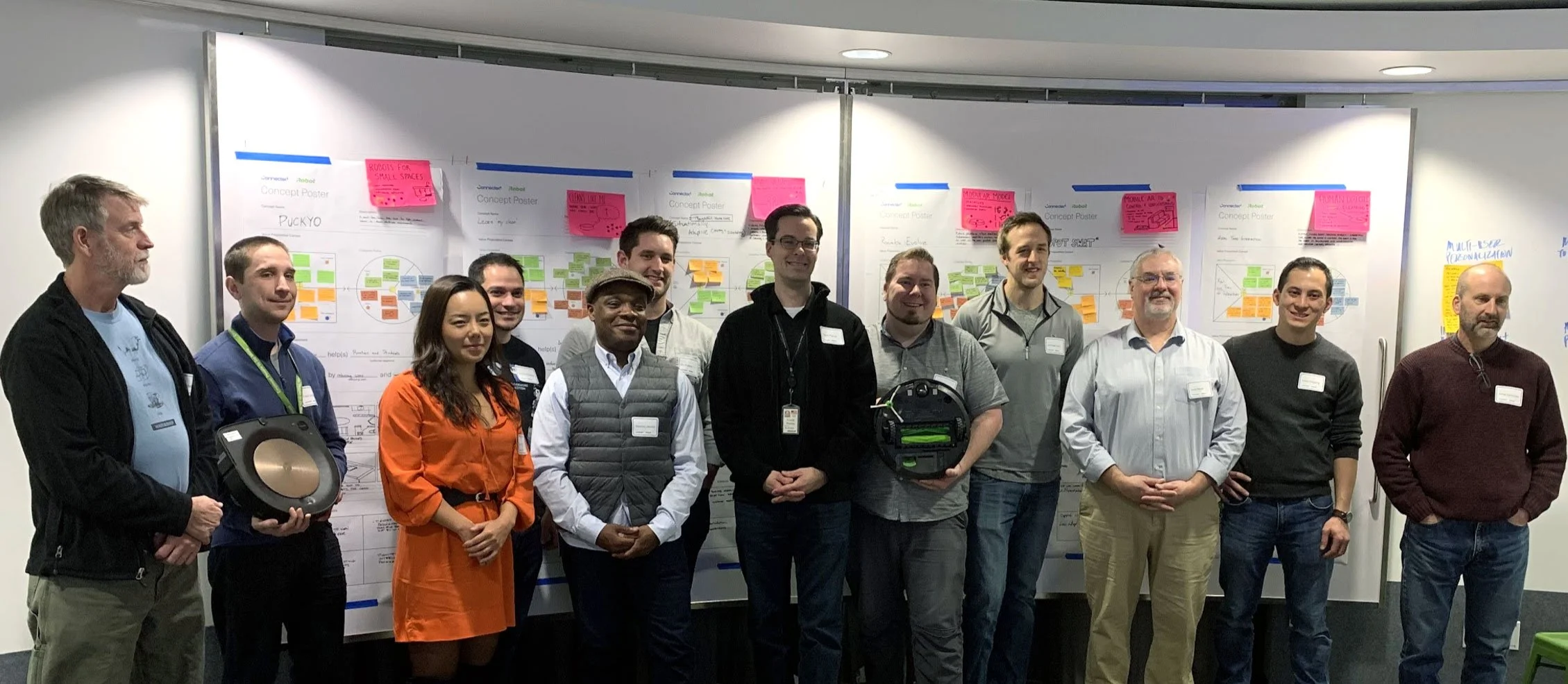
Workshop ParticipantsWhat set this workshop apart for them was the tangible impact it drove. Participants gained hands-on experience with methods and frameworks that directly addressed their challenges.
This practical focus allowed the teams to move from ideation to implementation effectively, achieving outcomes that extended well beyond the workshop itself.
Final Thoughts
The Product Thinking Workshop for iRobot stands out as one of the most rewarding experiences of my career. It showed me how workshops can bridge the gap between big-picture strategy and actionable results.
This experience reaffirmed my belief in the importance of flexibility and vision, as well as the need to adapt and innovate, especially when faced with new challenges like transitioning to remote delivery.
Reflecting on the workshop, I’m proud of how it empowered a leading organization to take meaningful steps toward growth and innovation. It reminded me that impactful design processes aren’t just about the output—they’re about inspiring teams and equipping them to create lasting change.